
What a cubic metre, a bulk bag and a loose load of logs mean
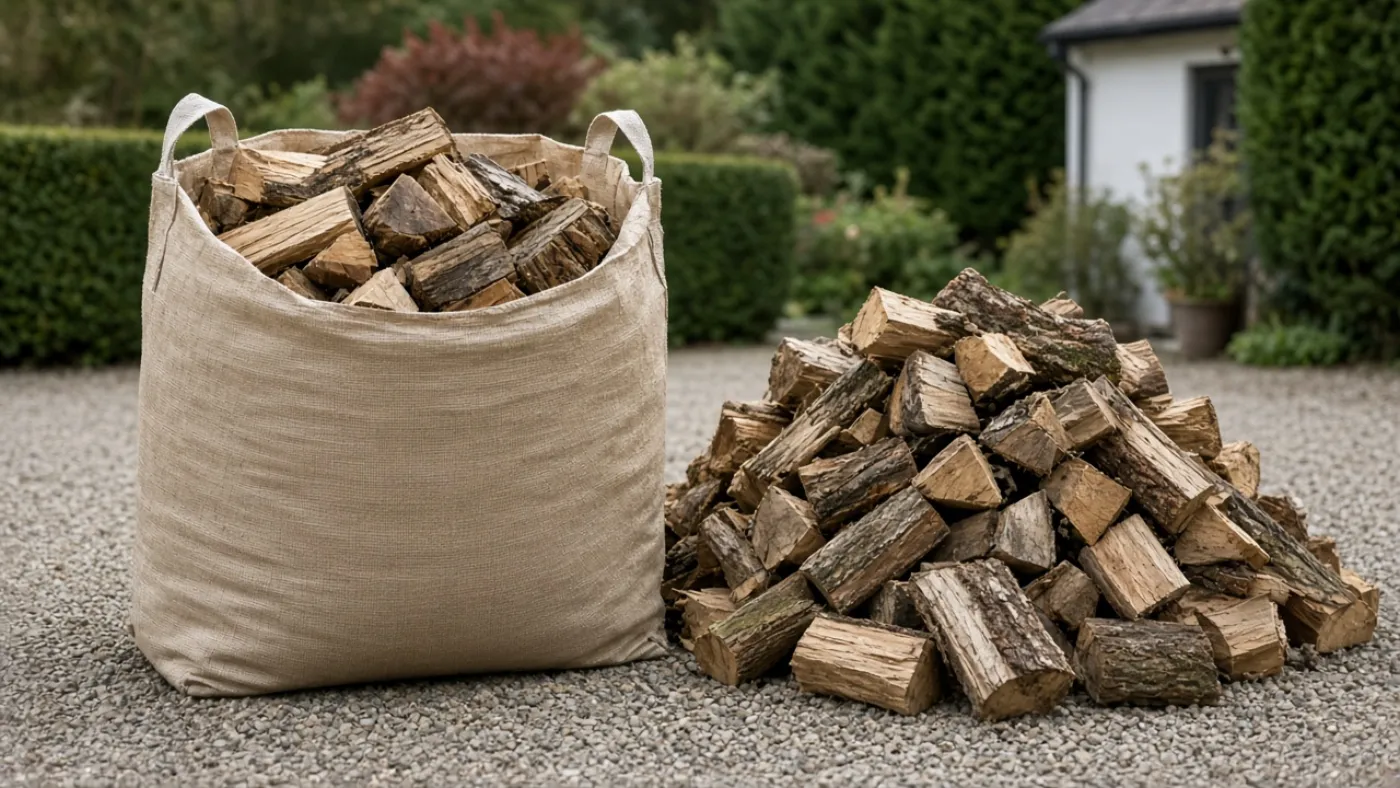
When you search for a cubic metre of logs, a bulk bag, a dumpy bag or a loose load, you are often looking at different names for volume. In England the legal unit is the cubic metre, and that figure decides whether a delivery must have a moisture content of 20 percent or less.
What a cubic metre actually is
A cubic metre is a box of space one metre high, one metre wide and one metre deep. It is a volume, not a weight. Two stacks that look similar can hold different amounts of wood once air gaps and log length are taken into account. A price is hard to judge until you know the volume.
England’s domestic wood rules use that same unit. GOV.UK guidance on selling wood for domestic use in England splits sales at 2 cubic metres. Below that line, wood sold for household heating must have a moisture content of 20 percent or less. At 2 cubic metres or more, certification is not required, but the seller must give you a set notice about drying and moisture. The cubic metre is therefore not only a shopping term. It is the official measure for those rules.
If a listing or a quote only says “a load” or “a bag”, you still do not know which side of that 2 cubic metre line you are on. Ask for the volume in cubic metres before you pay.
What the 20 percent moisture rule means for small volumes
GOV.UK says you can only supply or sell wood fuel in volumes of less than 2 cubic metres if it has a moisture content of 20 percent or less. The same page lists the products that sit under that rule: firewood in single retail bags, firewood supplied as a bulk delivery in loose volumes of less than 2 cubic metres, and the same two forms for wood briquettes.
That official wording matters. A “bulk delivery” or “loose” drop under 2 cubic metres is still a small-volume sale in England. GOV.UK uses the same 20 percent moisture figure. Ask the supplier for a moisture reading, or test a split face with a meter. Our guide to firewood moisture covers moisture. This page is about the volume that triggers the rule.
Bulk bags, dumpy bags, barrow bags and nets
Bulk bag, dumpy bag, tonne bag, barrow bag and net are trade names. They describe a container, not a legal unit. Two suppliers can use the same bag name and deliver different volumes. A cheaper bag is not better value if it holds less wood, and a dearer bag is not poor value if it holds more. The only way to tell is to ask for dimensions or a cubic metre figure.
GOV.UK treats “single retail bags” as the small-volume products that must be dry logs, including nets from a garage or garden centre. Look for a moisture figure on the packaging, on the shelf, or next to the price. For online sales, GOV.UK says moisture information should appear where the fuel is advertised. A certified bag can still get wet on soil in the rain, so see how to store firewood outdoors before a large bag arrives.
Loose loads, crates and trailer loads
A loose load is wood tipped or stacked without a retail bag. GOV.UK groups a loose volume of less than 2 cubic metres with other small sales: it must be dry logs. The same guidance has a section headed crates or trailer loads of wood for sales of 2 cubic metres or more. Those larger sales do not need moisture figure. The supplier may add a note that the wood is dry, and must still give you the official customer notice.
The official customer notice says the wood is not suitable for burning until it has been dried to 20 percent moisture or less. It tells you to dry it in a sunny, well-aired space for at least two years, keeping rain off in winter, and to test a freshly split surface with a moisture meter. Ask to see that notice, and confirm where a tipper or crate will be left before the lorry is booked.
Questions that make the volume clear
- What volume, in cubic metres, will be delivered?
- Is that figure the bag size, the stacked volume, or a loose tipped volume?
- If the volume is under 2 cubic metres, is the wood sold at 20 percent moisture or less?
- If the volume is 2 cubic metres or more, will I receive the official GOV.UK customer notice?
- Is delivery included, and where will the bag, crate or loose load be placed?
Those questions sit beside how to choose a log supplier near you. Hardwood or softwood and kiln-dried or seasoned still matter, but they do not replace a stated volume. See kiln-dried versus seasoned and hardwood versus softwood once you know how much wood is arriving.
How listings on this site can help
Log Price Guide is a free directory. Find local log suppliers, open the supplier database, or browse the county hubs. Confirm the current volume with the business. Optional listing plans are Featured at £19 a month or £95 a year and Premium at £39 a month or £199 a year. Those plans change how a listing is shown, not the cubic metre rules. If you are ordering for this winter, read buying logs in winter and have the store ready before delivery.
Common questions
Is a bulk bag the same as a cubic metre of logs?
Not automatically. Bulk bag is a trade name for a large woven bag. A cubic metre is a measured volume of one metre by one metre by one metre. Ask the supplier to state the delivered volume in cubic metres, not only the bag name.
Why do England’s firewood rules talk about two cubic metres?
GOV.UK says wood sold for domestic use in volumes of less than 2 cubic metres must have a moisture content of 20 percent or less. Sales of 2 cubic metres or more are treated as a large load, but the supplier must give you the official customer notice on drying and moisture.
Does a loose load have to be dry?
If the loose volume is less than 2 cubic metres, GOV.UK says it must have a moisture content of 20 percent or less. A larger crate or trailer load of 2 cubic metres or more is treated as a large sale and must come with the official drying notice.
What should I ask before I order a bulk bag?
Ask for the delivered volume in cubic metres, whether the wood is dry enough, ideally under 20 percent moisture, whether delivery is included, and where the bag will be placed. Then find local log suppliers on Log Price Guide and confirm those details on the listing and with the business.