
Firewood moisture explained
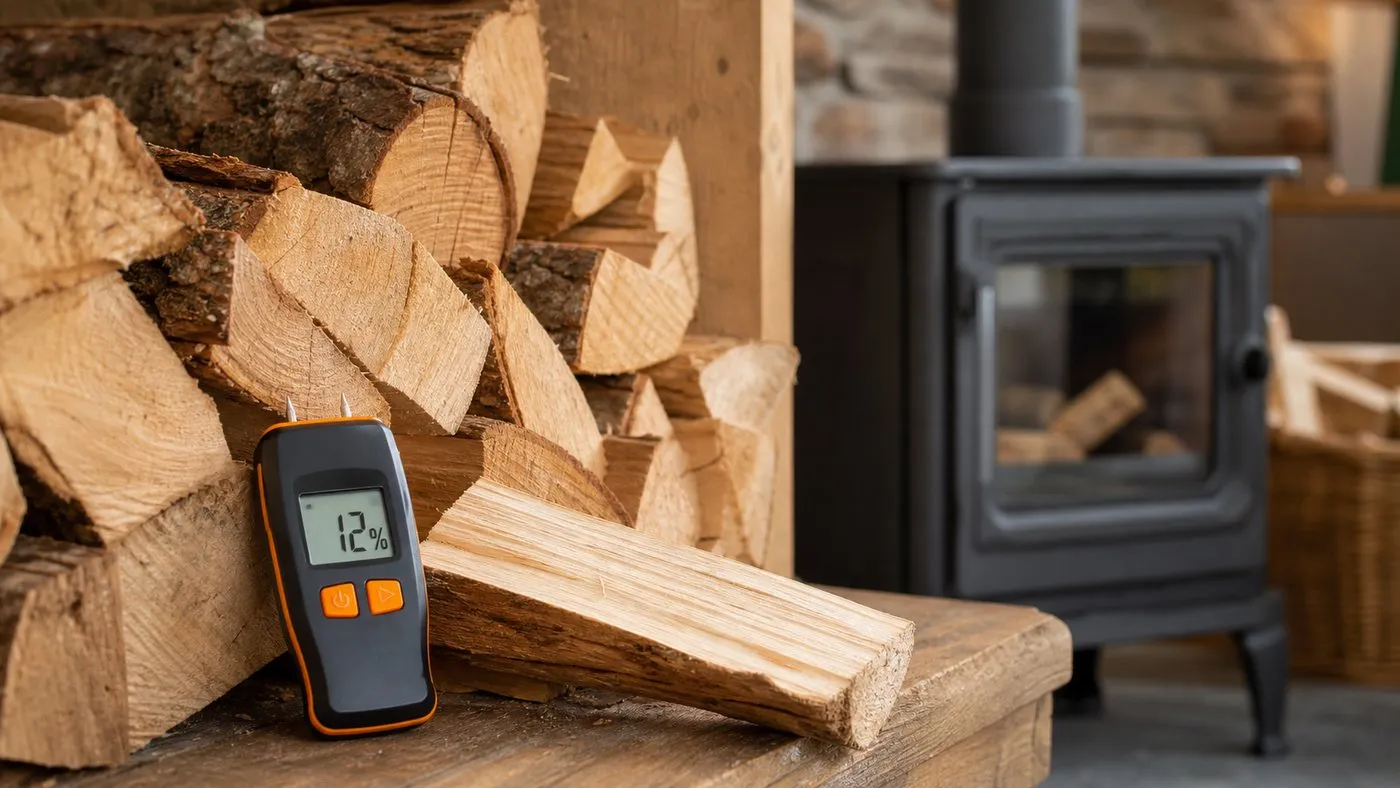
Moisture content has a huge effect on heat, smoke and stove performance. Buy logs that are properly seasoned or kiln-dried, ideally under 20 percent moisture.
Why moisture matters
Wet logs burn poorly. Instead of turning energy into useful heat, the fire has to drive water out of the wood. That means more smoke, less heat, dirtier glass and a less pleasant fire.
Dry logs should light more easily and burn more cleanly. For customers, this makes moisture one of the most important details to check before you order.
What dry enough means
For a household stove, aim for wood that is properly seasoned or kiln-dried, ideally under 20 percent moisture. GOV.UK uses that 20 percent figure for small-volume sales in England. A label such as “seasoned” is a drying method, not a moisture reading.
What a listing does not tell you
A dryness note does not answer every buying question. You still need to check bag size, delivery charge, log length, wood type and customer reviews. Dry wood can still be expensive or inconvenient if the delivery area is unclear.
Customer checklist
- Ask the supplier for a moisture figure, or use a moisture meter on a freshly split face.
- Check whether customers mention dry logs in Google reviews.
- Ask how the logs are delivered and whether they arrive covered.
- Store the logs correctly after delivery.