
Kiln-dried vs seasoned logs: what the labels mean
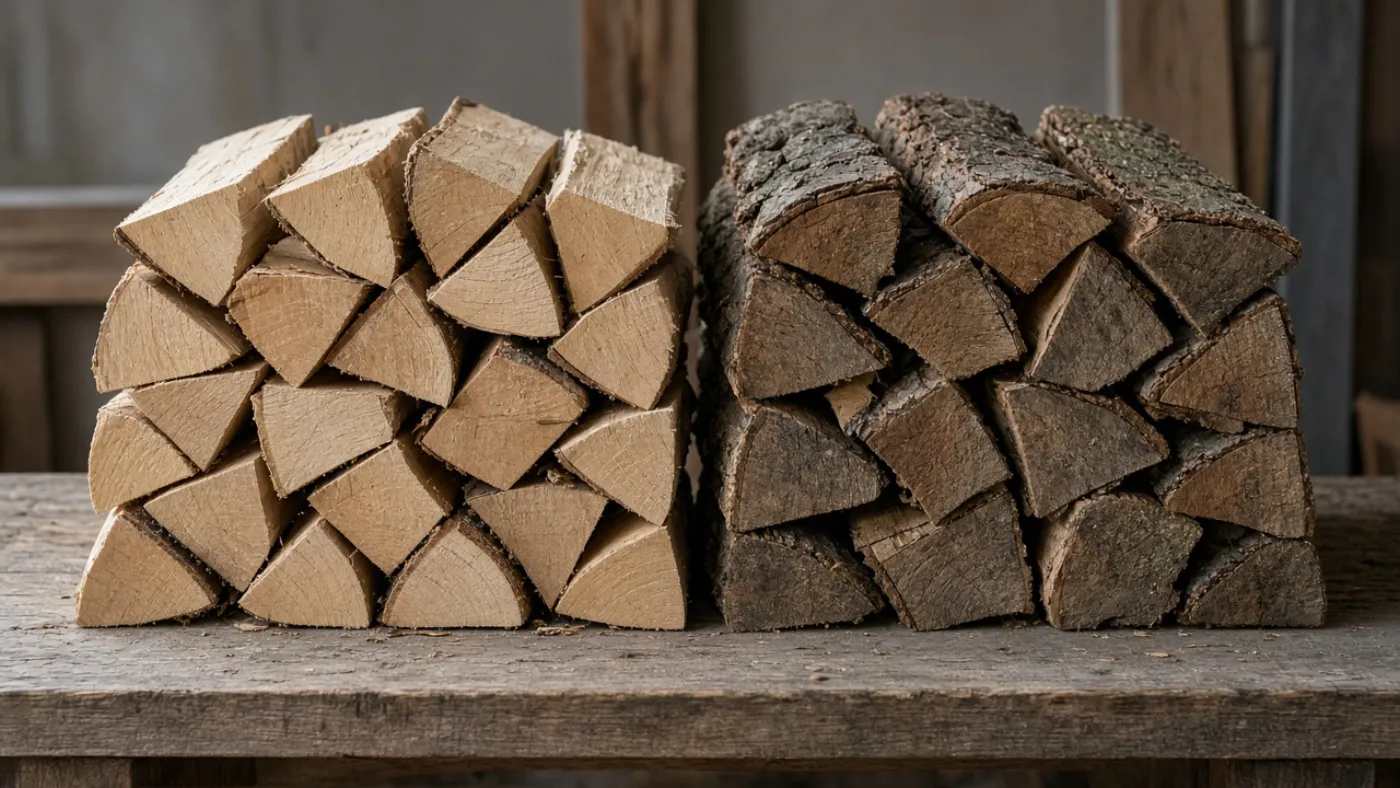
Kiln-dried and seasoned are the two labels UK buyers see most often. They describe how moisture was taken out of the wood, not a score and not a ranking. The figure that matters for a stove is moisture of 20 percent or less, which is the moisture test for small-volume sales in England.
What seasoning means
HETAS describes seasoning as waiting for wood to lose moisture until it reaches 20 percent or less. Freshly felled trees and the logs split from them have a high moisture content, often up to 50 percent. HETAS says you should only burn wood at 20 percent or less, so you get more heat per log, less soot, a lower chimney-fire risk, and less pollution.
The three conditions HETAS lists for seasoning are time, air and sunlight. Logs should be split, stacked with air gaps, raised off the ground and sheltered from rain. HETAS says hardwood generally takes between eighteen months and two years to dry enough. That is a guide for people drying their own wood. It is not a certificate that a bag marked “seasoned” has reached 20 percent.
The official GOV.UK customer notice for large sales uses a similar drying story. It says to dry wood in a sunny, well-aired space for at least two years, keeping rain off in the winter, and to test a freshly split surface with a moisture meter. Radial cracks and bark that comes off easily are only clues. The meter reading is the check.
What kiln-dried means
Kiln-dried logs have been dried in a kiln so the moisture is reduced before sale. Suppliers use a kiln when they want wood that can be sold as dry without waiting through one or two seasons of air drying. The legal test in England is still the moisture content, not the word “kiln” on the bag.
GOV.UK says wood sold for domestic use in volumes of less than 2 cubic metres must have a moisture content of 20 percent or less. The GOV.UK applies that moisture rule to firewood, briquettes and kindling in those smaller volumes. A kiln-dried bag sold under 2 cubic metres should still be dry enough, ideally under 20 percent moisture.
Kiln-dried wood is not weather-proof. Leave a bag open on a wet drive and the outer logs take on water again. Store it as you would any dry fuel: under a roof, off the ground, with air through the sides. That is the same advice as in how to store firewood outdoors.
Why the label is not the whole story
Seasoned and kiln-dried are methods. A moisture figure is a measurement. A seasoned load can be dry logs if it is dry enough and certified. A kiln-dried load can fail the buyer if it was stored badly after the kiln, or if the sale is a large volume that was never certified. Do not treat either word as a substitute for a moisture meter reading.
HETAS advice on checking moisture is to use a meter, aim for 20 percent or lower, and follow the stove maker’s instructions. A wet-basis reading is the accepted value for wood fuel. Split the log and measure the centre of the fresh face at once. Take samples from the middle of the pile as well as the surface.
If you buy 2 cubic metres or more, GOV.UK does not require a certificate on those larger loads. The seller must still give you the customer notice. Ask whether that large load is kiln-dried, air-seasoned, or still drying, and ask for a moisture reading if you plan to burn it this week.
What each type is useful for
Kiln-dried logs are the usual choice when you need fuel that is already dry, for example a first winter order or a top-up when the store is empty. Seasoned logs can be a good choice when you have covered storage and time, or when a local supplier has been drying hardwood for the period HETAS describes. Neither type replaces the other for every household. The right buy is the load you can keep dry and burn at or below 20 percent moisture.
Species still matters once the wood is dry. Hardwood and softwood behave differently in a stove, which we cover in hardwood versus softwood logs. A Sussex-specific kiln-dried search is in kiln dried logs in Sussex. This page is the UK-wide label question: how the wood was dried, and how you prove it is dry enough.
What to check on a listing
- Does the listing say kiln-dried, seasoned, or barn-dried?
- If the volume is under 2 cubic metres, is a moisture figure shown?
- Is the delivered volume stated in cubic metres, not only as a bag name? See what a cubic metre, bulk bag and loose load mean.
- Will the load arrive covered, and do you have a dry store ready?
Then find local log suppliers on Log Price Guide, or open the supplier database and the county hubs. Published product words are snapshots. Confirm the current description and moisture details with the supplier before you order. If you want the health and legal side of wet wood, continue with burning wet wood: the risks and the UK rules.
Common questions
Are kiln-dried logs always drier than seasoned logs?
Not by label alone. Both kiln drying and seasoning are ways of lowering moisture. The figure that matters in England is 20 percent or less. That 20 percent figure is the test for small-volume sales in England. A seasoned load can be dry, and a kiln-dried load can get wet again in the rain.
How long does seasoning take?
HETAS says hardwood generally takes between eighteen months and two years to dry enough. The official GOV.UK customer notice for large sales says to dry wood in a sunny, well-aired space for at least two years, keeping rain off in winter. Time alone is not a moisture reading.
Is seasoned the same as dry enough to burn?
No. Seasoned is a drying method. Dry enough for a stove usually means a moisture content of 20 percent or less on small-volume sales in England. Ask the supplier or test a split face with a moisture meter.
Can I burn kiln-dried logs straight away?
Kiln-dried logs are sold as wood that has already been dried. GOV.UK says a moisture content of 20 percent or less is the figure that matters at sale. Keep them under cover after delivery, because rain can wet them again.